

VP, AI & Technology at PreciseDx
Vijay Yadav
I get AI past the pilot.
I've spent more than twenty years across pharmaceuticals, life sciences, med tech, and industrial technology, the last ten building AI functions and products for operations, supply chain, clinical, sales and marketing teams. What sets that work apart: guardrails built into the product design. Today, I lead AI and technology for precision diagnostics, where the AI guides physicians on breast cancer prognosis and treatment decisions. When lives are on the line, the guardrails go into the product architecture, not around it.
$46M+
in recurring annual P&L impact
5
AI products in production
2
AI functions built from the ground up
3
continents where I've led teams
EXPERIENCE AT



Recognition
Merck Technology Innovation Award, 2024
Ranked first of 27 nominations, for a GenAI and agentic AI platform for manufacturing deviation investigations. It is Merck's highest technology innovation award.
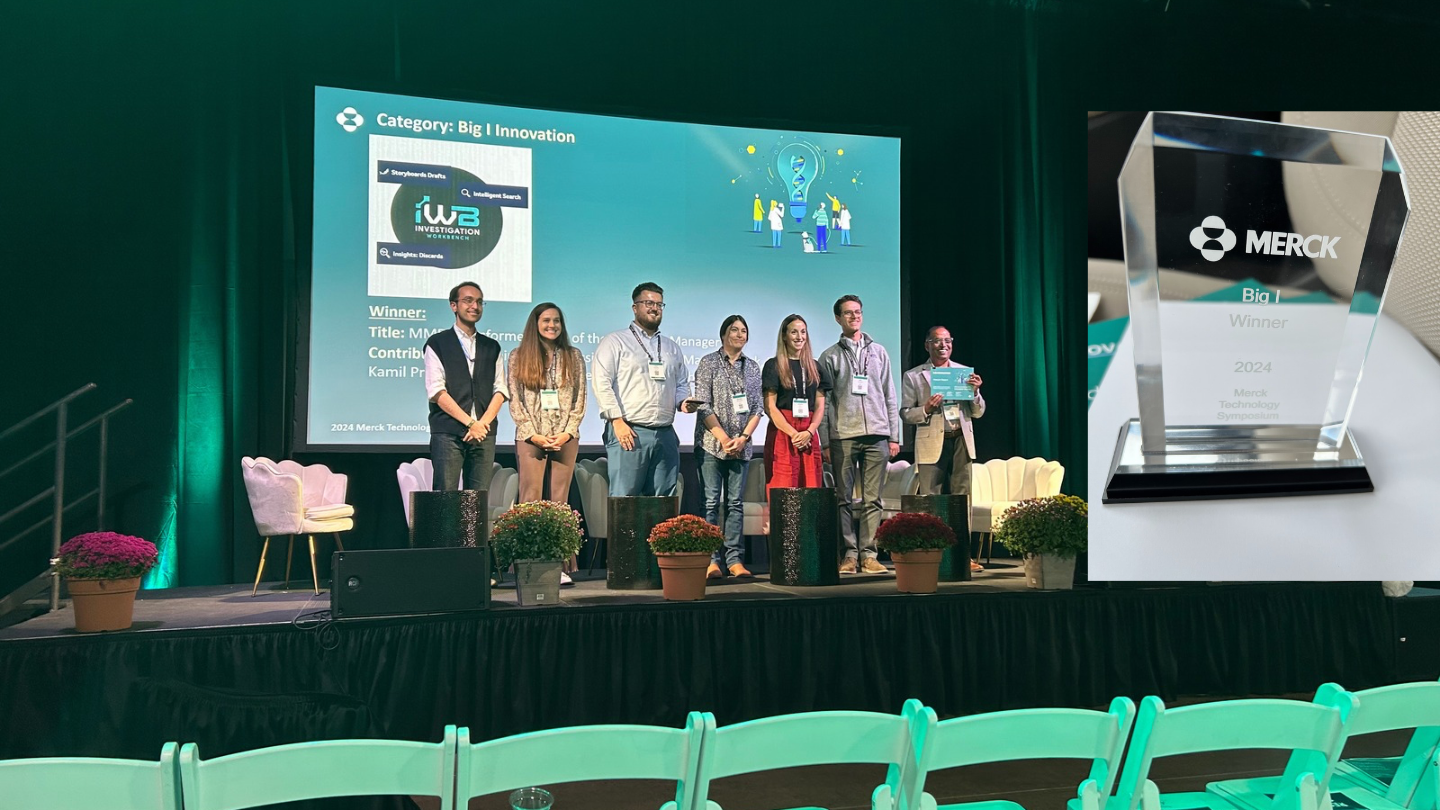
Receiving Merck Technology Innovation Award
Manufacturing Leadership Award, 2021
Awarded to Merck for the automated visual inspection product I led. The product went from pilot to production on manufacturing lines, reducing false rejects and recovering revenue lost to discarding good product.
AstraZeneca Innovation Award, 2010
For a process analytics and simulation capability that became the foundation of AstraZeneca's business process excellence and digital automation program.
CDO Magazine Editorial Board, 2023
Invited to join the board, which brings together senior data and AI executives from more than 25 countries to shape the data leadership agenda. Members share their field experience through the magazine's thought leadership, research, and events, which reach more than 600,000 readers worldwide.
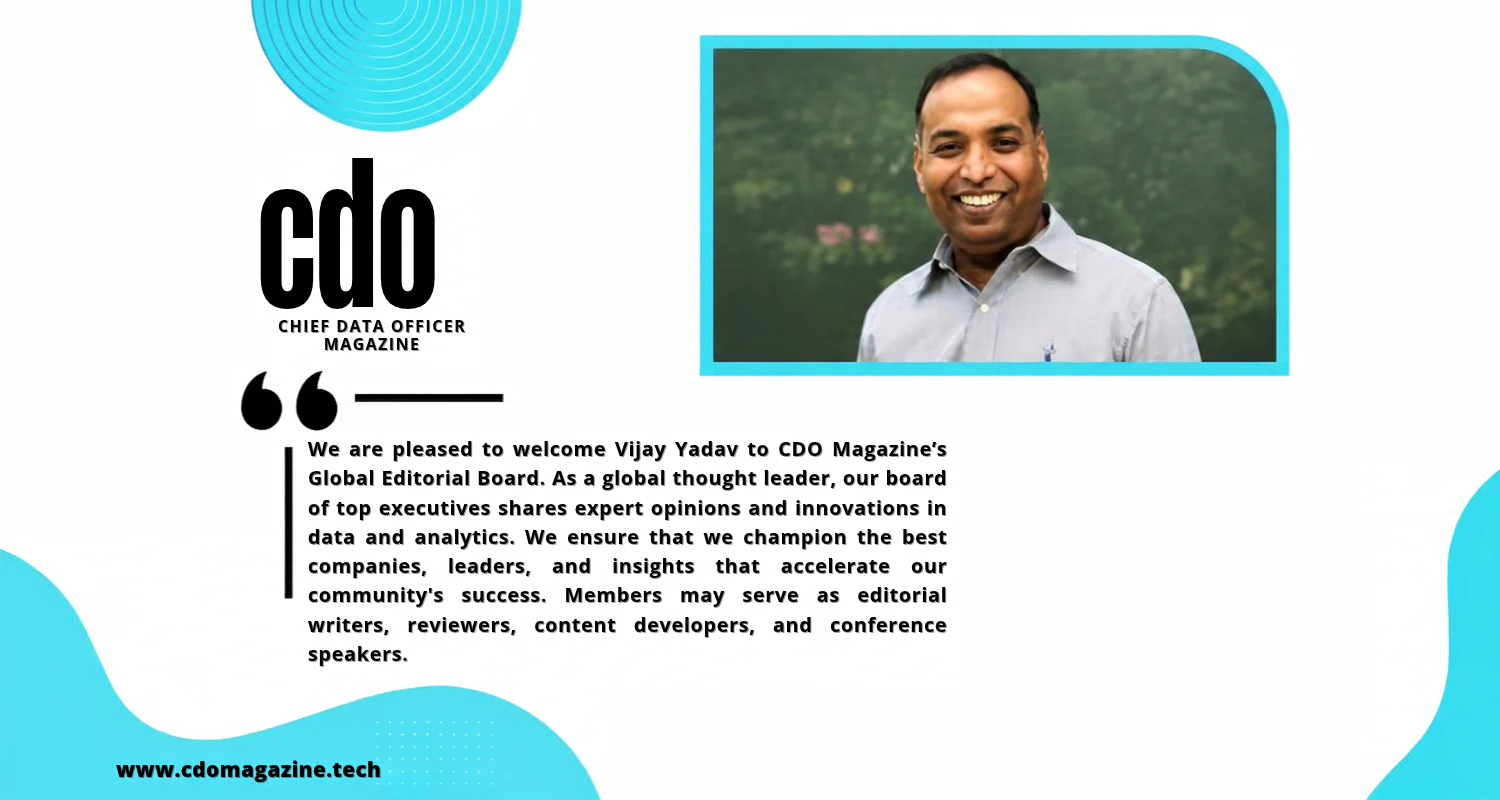
CDO Magazine Editorial Board
What I learned taking AI into production
I've led AI programs that reached production and delivered results, and some that stalled.
The difference was rarely the technology!
The ones that stalled failed in one of three ways: pilots that never passed the lab, products user didn't trust enough to use, and products that did not deliver the expected business outcome. The programs that worked, including both award winners at Merck, followed a disciplined approach.
Here are the five lessons that got AI past the pilot.
01
Solve the right problem with a committed sponsor
AI projects usually get shelved for various reasons, but two are common: either it was the wrong problem, or no senior leader owned the result.
Every initiative must start with a business metric and an executive sponsor accountable for it. A focused proof of concept then tests whether the value is real. If it is, the sponsor has the evidence to clear roadblocks and drive adoption. If it isn't, I stop and move on.
At Merck, the Data Science Incubation Lab I set up ran ten proofs of concept at once this way. Three became enterprise products with committed business sponsors. One became a business-funded capital project and won the 2021 Manufacturing Leadership Award. The rest didn't show enough value to move forward.
02
Build with customers, not for them
A solution can meet every requirement and still go unused. The gap is between what customers say out loud and what they actually expect to experience.
Closing that gap is built into how my teams run every program. Customers and business stakeholders join from the first pilot: they shape the product roadmap and the workflow, see progress early, and tie the work to their own goals. Adoption follows because they helped build it.
At PreciseDx, that means working with the chief scientific officer, the chief medical officer, pathologists, and clinical leaders, so AI product outputs become something physicians adopt and explain to their patients.
03
Close the gap between data and AI
Data engineering and data science teams often see the same problem from opposite ends. Data teams may not see what a model needs. AI teams may underestimate what it takes to produce that data reliably.
Having led both, I organize them as one function, so data is ready for AI before a model needs it.
At Merck, that meant building a data platform ready for building GenAI and agentic AI products. Several use cases shared the same foundation and reached production faster.
04
Make compliance the blueprint, not the checklist
In AI, when things go wrong, they can go wrong fast. Yet technical execution and regulatory risk are usually treated as separate things, and too many companies handle AI risk governance as a check-the-box exercise and compliance burden with no value.
Having spent years building AI in heavily regulated domains, I embed risk guardrails into the engineering design from the start. That is what earns the trust that adoption depends on.
At PreciseDx and Merck, governance was part of the architecture from day one and implemented in every product that moved to production.
05
Lead the human side of the change
Building the technology is only half the battle. In complex organizations, change is hard, and great technology often fails to deliver value simply because people don't adopt it.
That is why I bring stakeholders into the process early. When the work connects to their day-to-day success and makes their jobs easier, they use it. That is how an AI solution delivers real value.
At Merck, I started the Data Science Knowledge Network, a practitioner community that grew to more than 500 members, ran the company's first three hackathons, and reached over 1,000 staff. Other divisions adopted the model.
My approach to building trust that gets AI used
People use AI when they trust it, especially when risk of something going wrong is harmful to the business. My team and I earned that trust right from the pilot by building the guardrails into the design.
In regulated AI, a model that fails quietly can cause harm before anyone notices. Governance added as a checklist may not prevent that. The key is to build the guardrails thoughtfully in the product architecture and in the workflows.
At PreciseDx, I led the AI governance program for an AI cancer diagnostic in commercial clinical use in the U.S. as a laboratory-developed test. The program covers the full model lifecycle: risk management to ISO 14971, data lineage, model performance monitoring, human oversight, and post-market surveillance.
Design controls, analytical validation, and software development follow ISO 13485 and IEC 62304. An outside regulatory consultant has independently assessed the program.
Clinical AI
GenAI at enterprise scale
At Merck, I was a founding member of the AI Risk & Governance Council, which set the operating framework for responsible AI.
My team implemented the enterprise standards for embedding guardrails into GenAI architecture with evaluation and monitoring. Every AI product that moved to production was built with controls for safe use.
Frameworks I work to
FDA AI guidance for medical devices · NIST AI RMF · EU AI Act · ISO/IEC 42001 · ISO 13485 · ISO 14971 · ISO/IEC 27001 · IEC 62304 · GxP · HIPAA · GDPR
Talks and podcasts
I speak about taking AI into production, AI governance, and building data and AI functions especially in the context of GenAI and Agentic systems.
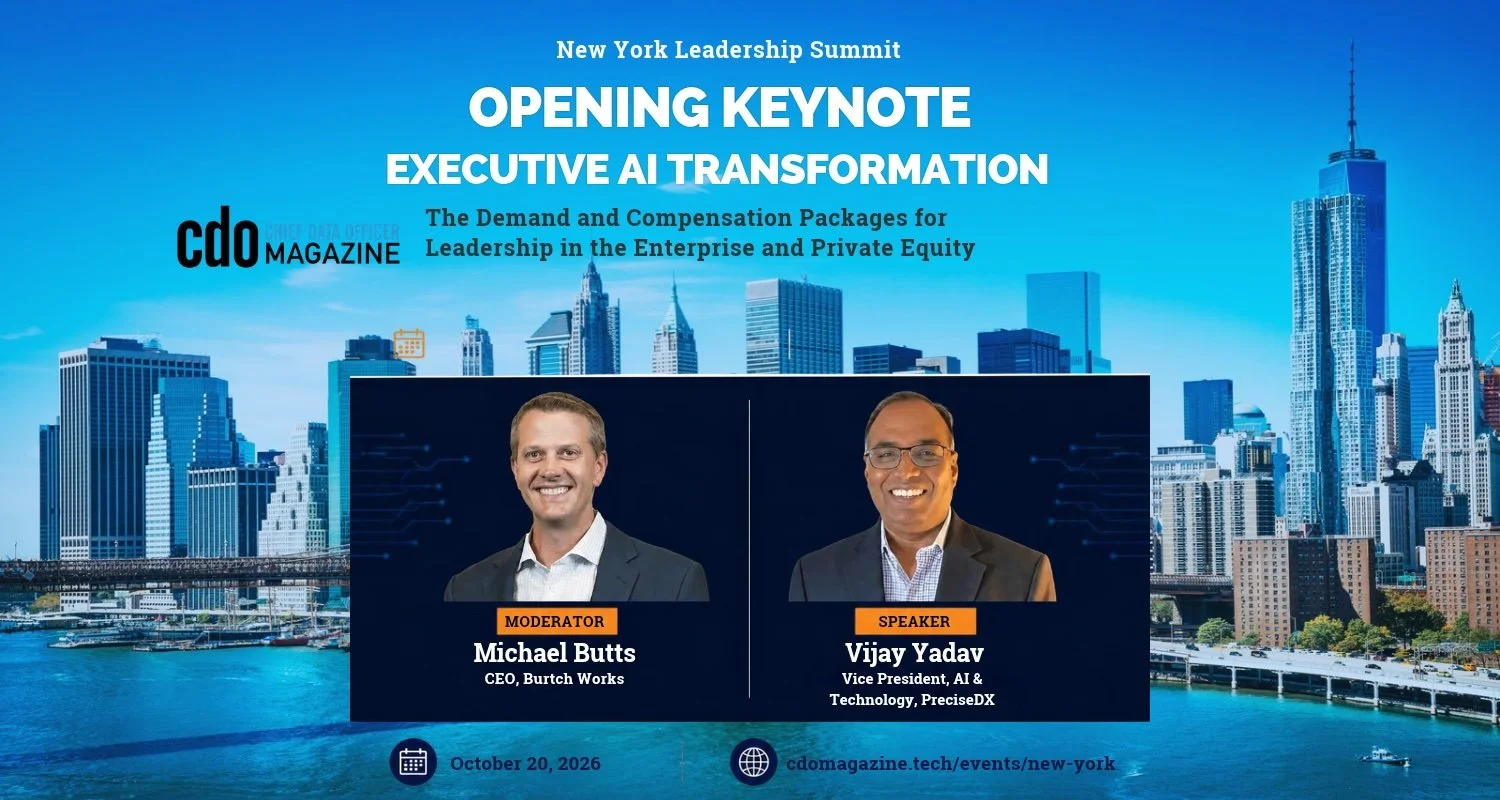
NYC CDO Magazine Leadership Summit, 2026. Opening Keynote, Executive AI Transformation: The Demand and Compensation Packages for Leadership
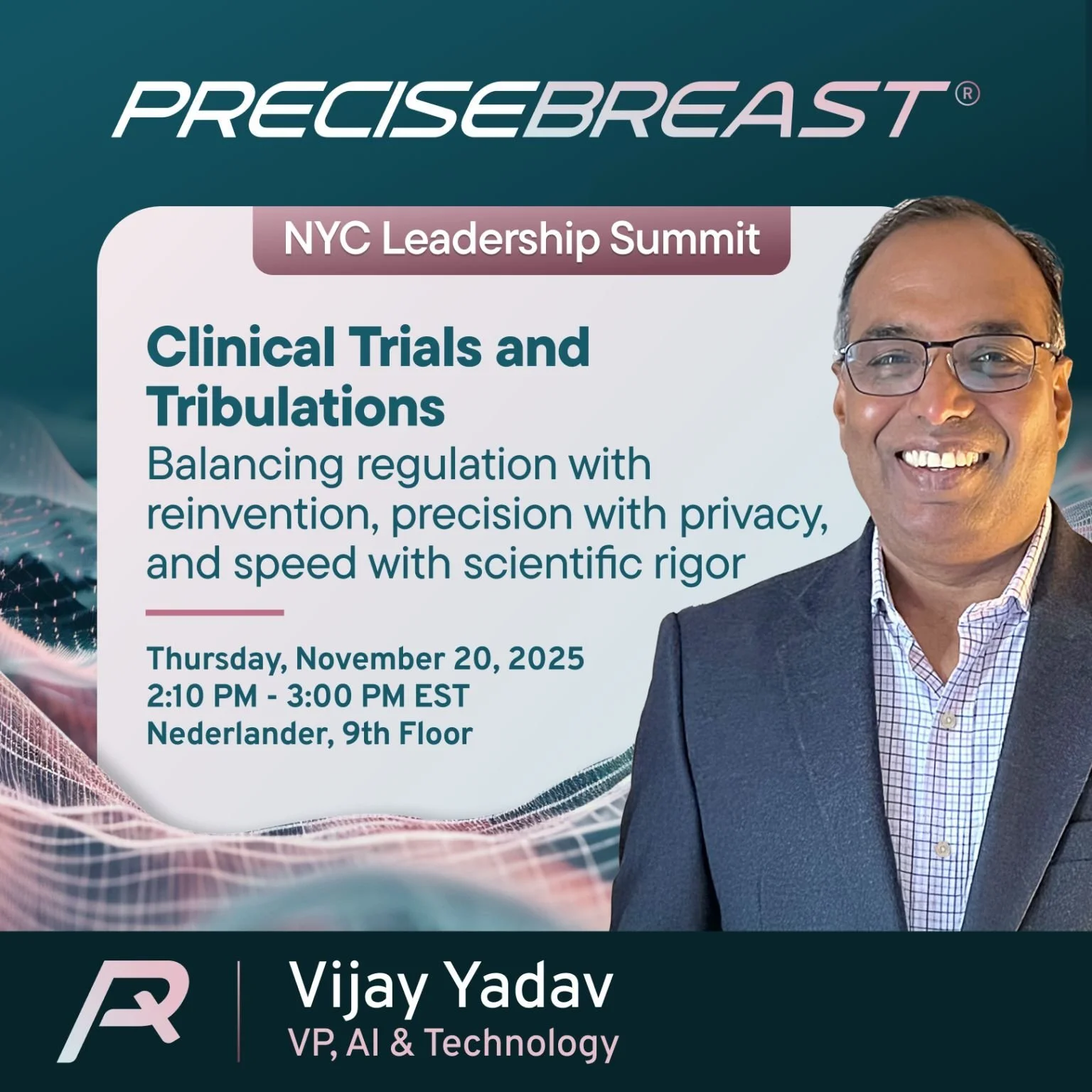
NYC CDO Magazine Leadership Summit, 2025. Clinical Trials and Tribulations on balancing regulatory guardrails with innovation, privacy, speed and scientific rigor
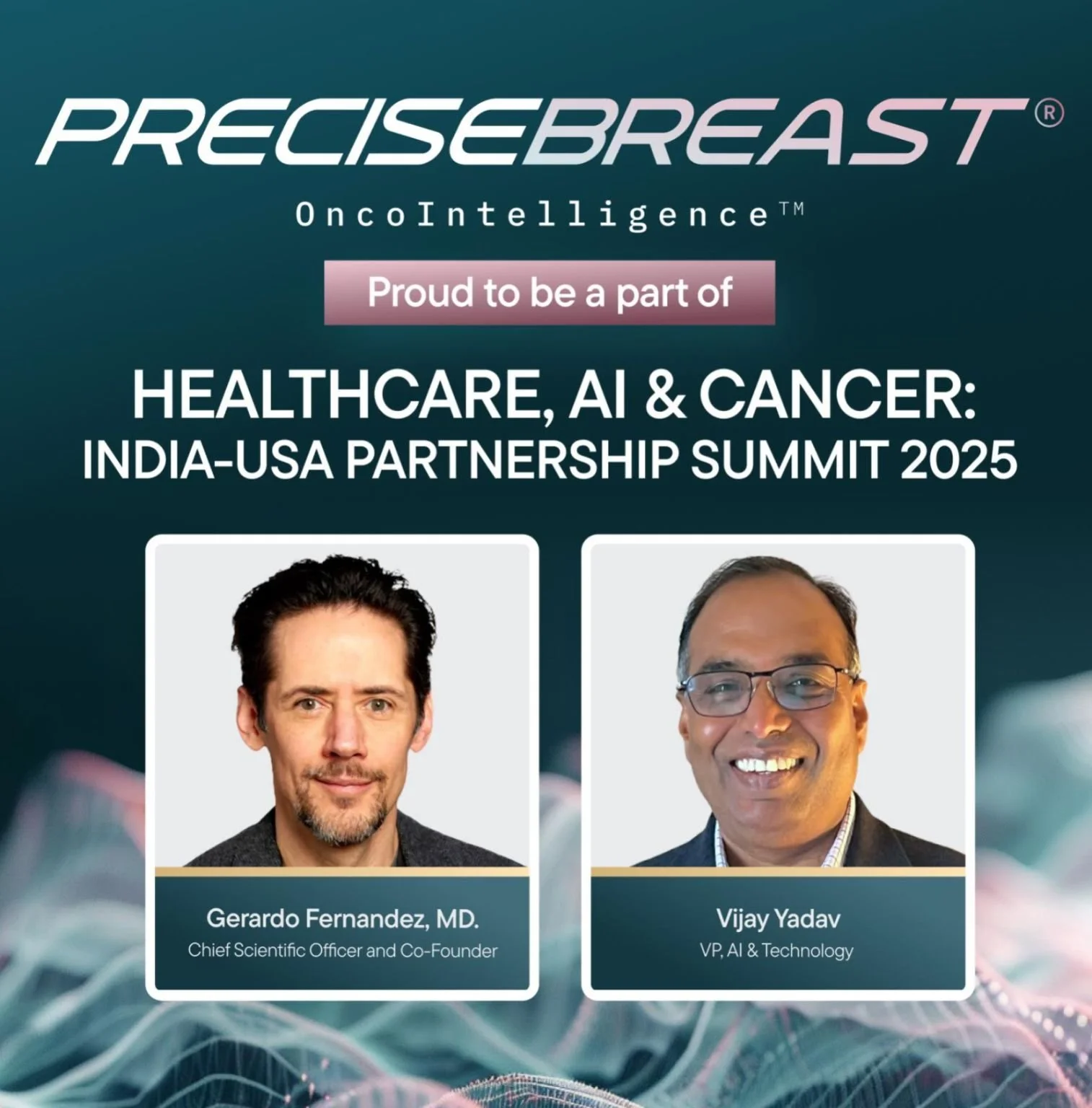
Healthcare, AI & Cancer Conference: India-USA Partnership Summit, 2025. Featured speaker on Digital Twin in Healthcare
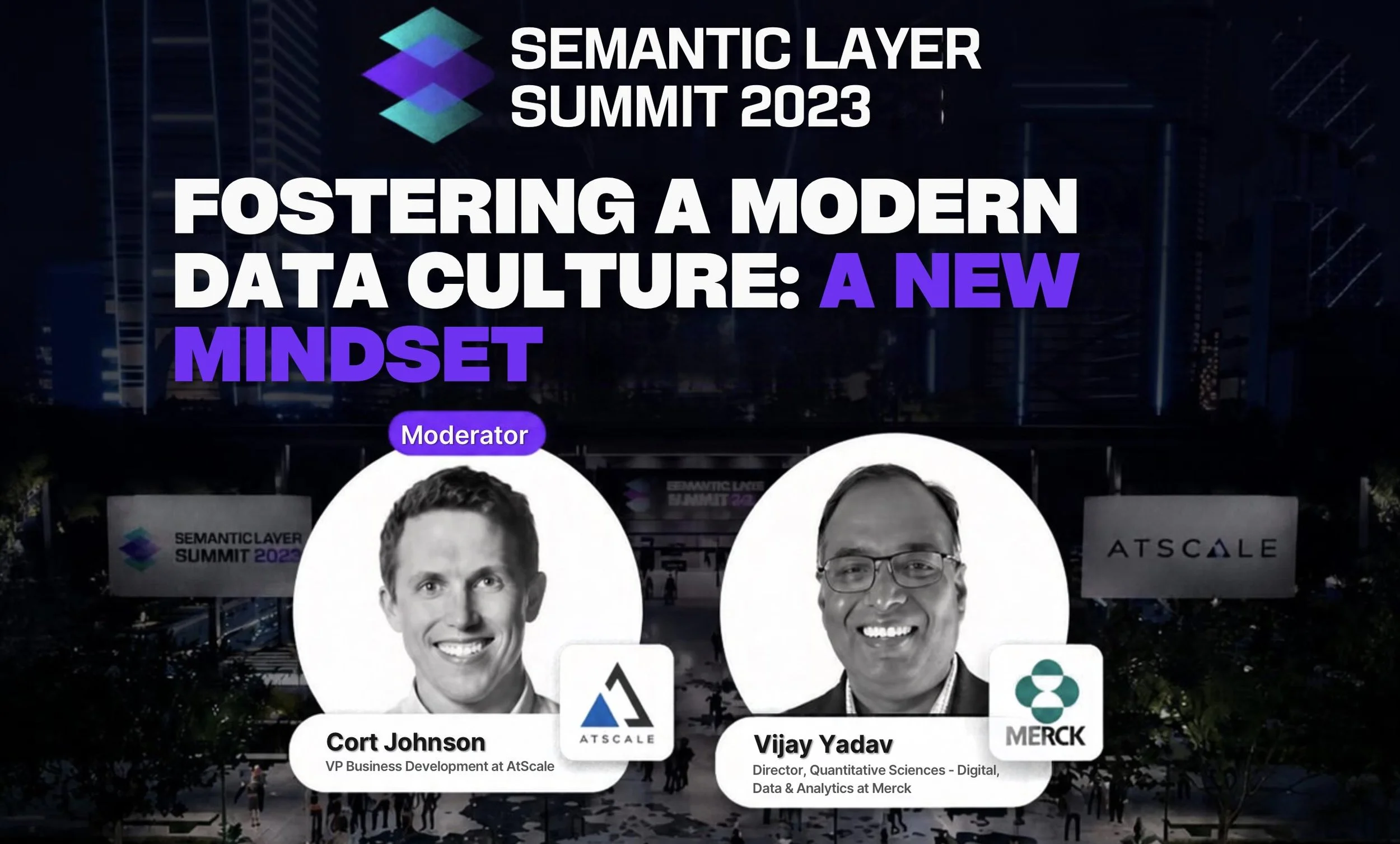
Semantic Layer Summit, 2023. Fostering a modern data culture.
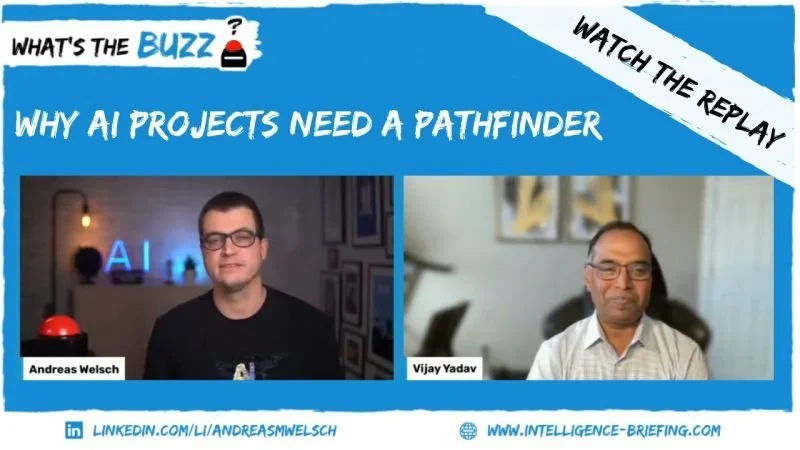
What's the Buzz? podcast, 2023. Why AI projects need a pathfinder.
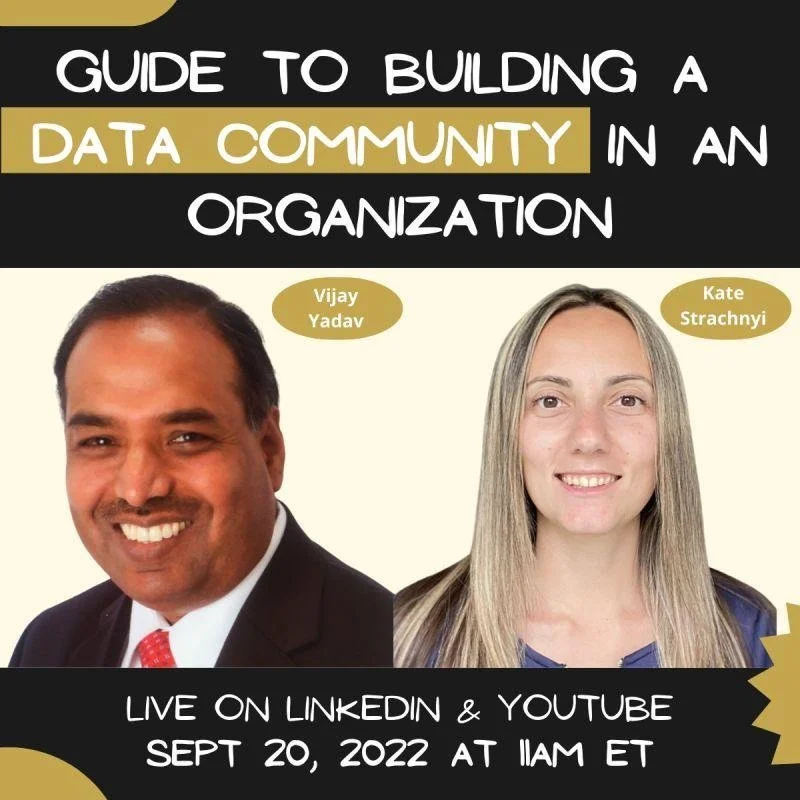
Conversation with Kate Strachnyi, 2022. A practical guide to building a data community.
Publications

How can language models assist with pharmaceuticals manufacturing deviations and investigations?
International Journal of Pharmaceutics, Volume 669, January 2025. Peer-reviewed. Co-author.
Drawn from applying large language models to manufacturing deviation investigations in production.

Vision Inspection Using Machine Learning/Artificial Intelligence
ISPE Pharmaceutical Engineering, November/December 2020. Co-author.
Drawn from taking computer vision inspection from proof of concept to production on manufacturing lines.
How I build and lead AI functions, the use cases that reached production, and my work across technology and business functions.
Leadership Use cases Across technology functions Across business functions
Leadership & Experience
A single AI product is a project. A function that keeps AI products shipping is a capability.
How I lead
Strong teams and leaders have been behind every success, and I lead through them: setting a clear direction, keeping the focus on business outcomes, making clear what good looks like, and giving members room to execute.
What stays the same at any company size
Priorities tied to business metrics
Business owner or champion for each initiative
Business is fully embedded as part of the product development journey, without an exception
How I build and lead AI functions
What I've seen work is an AI function built around three capabilities, each with a clear job:
01: Prove small scale PoC or pilot solution works and has the users' trust
02: Take proven pilot to production at scale
03: Advice and support business teams exploring AI on their own.
That split keeps pilots from stalling and gets AI adopted across the business.
01 DISCOVERY AND PILOTS
PROVE IT WORKS WITH TRUST
One end-to-end team: data and AI engineering, architecture, full-stack development, and governance and compliance experts
Business sponsors and SME team members embedded in every pilot to define the problem and bring in subject matter experts
Built to production standards for guardrails and performance, refined with users until they trust the results
02 SCALE
TAKE IT TO PRODUCTION
Proven pilots become full production programs
What's left: scaling the technology and integrating with enterprise systems
The same governance and compliance experts stay with it
03 ADVISORY
SUPPORT THE BUSINESS
Technical guidance for business teams running their own AI experiments
How it works in practice
The same model works well at companies of different sizes. What changes is who scales the work.
Pilot to production to P&L: selected use cases
AI and data products that reached production and delivered business results, across four companies.
AI in cancer care
At PreciseDx, my team and I scaled an AI breast cancer diagnostic already in clinical use. The AI platform guides physicians in prognosis and treatment decisions. Re-architected the platform for deployment across the global regions, with the quality and security controls regulated clinical software requires.
GenAI across operations and quality
Directed a GenAI and agentic AI platform for manufacturing deviation investigations at Merck. Research time per deviation dropped by 93%, and Merck's value realization team validated the business impact. The platform ranked first of 27 nominations for Merck's 2024 Technology Innovation Award.
A GenAI copilot for automation engineers raised their productivity by 30%. A GenAI product for automated document processing delivered annual savings.
Real-time visibility and control system
Scaled a real-time batch visibility platform at Merck from a single-site pilot to a multi-site network. It helped avoid contractual penalties and lost revenue.
An earlier real-time production visibility platform cut batch cycle time by 10%.
At Buckman, launched an Azure IoT platform for remote process monitoring and closed-loop control. It won three new customer accounts in its first year and cut customer chemical consumption by 8%.
AI / Computer vision in operations
Took an automated visual inspection system at Merck from proof of concept to production as a business-funded capital project. It reduced false rejects and recovered revenue lost to discarding good product. The work received the 2021 Manufacturing Leadership Award.
Combining inspection defect data with supplier pricing identified higher-quality suppliers and cut effective raw-material costs by 20%.
Revenue and yield gain in industrial operations
Process models at Buckman raised ethanol yield by 3% and corn oil yield by 4.5% at customer plants.
An ML entity-resolution system for distributor chargebacks raised matching accuracy from 70% to 90% and closed a monthly revenue leak. That system was built during a consulting engagement at Alliance Life Sciences.
Across the technology functions
Leading the different technology stacks showed me how product, engineering, security, and quality decisions shape what AI can deliver.
Today at PreciseDx, I lead all five areas below. Earlier in my career, I've led in these roles below or worked closely with the leaders in them.
The value isn't in owning them all. It's in knowing what each tech leader's interests are, where their challenges come from, and what choices help reach agreement faster. That experience has positioned me to be a good partner and leader of an AI function.
Product management
Product strategy and roadmap for an AI diagnostic, including customer discovery and adoption criteria.
At PreciseDx, I managed the product roadmap and serve as product manager.
Product manager for multiple products at Merck and Buckman
AI and data engineering
HOME BASE: AI strategy and the full stack beneath it: GenAI and agentic systems, computer vision, foundation models, MLOps, and data platforms.
AI breast cancer diagnostic: PreciseDx
GenAI and agentic AI platform for deviation investigations: Merck
Engineering and platform
Sound architecture, cloud cost control, and reliability at scale, across AWS, Azure, and GCP.
At PreciseDx, re-architected the platform for deployment across regions. Real-time batch visibility, scaled from one site to a multi-site network: Merck
Cybersecurity, IT operations
Data protection, access controls, and resilient systems, built to HIPAA, GDPR, and ISO 27001.
At PreciseDx, led hardening that passed independent penetration and vulnerability testing.
Digital Compliance and IT efficiency: inVentiv, AstraZeneca
Quality, reg governance
Design controls and evidence to IEC 62304 and ISO 13485, with risk frameworks aligned to NIST AI RMF and the EU AI Act.
Quality management system aligned to ISO 13485 and IEC 62304: PreciseDx
Founding member, AI Risk & Governance Council: Merck
Across the business value chain
Working across the end-to-end value chain showed me how one business function's data and decisions cascade and impacts the next.
Over twenty years, my teams and I have built data and AI solutions from suppliers to customers: procurement, manufacturing, and supply chain through clinical, medical, and commercial. That breadth gives me an enterprise view. I can see how a change in one function affects the next, tie each AI investment to the metrics business leaders own, and bring the right stakeholders in early. That's how AI moved from a single use case to enterprise value.
An AI diagnostic company, end to end
PRECISEDX · TODAY
From next-generation AI product development, clinical data, and quality and regulatory, through procurement and vendor contracts, U.S. and international launch, and order-to-cash, CRM, and billing. My teams build and run the systems behind each of them, through to the clinical reports physicians use in treatment decisions.
Manufacturing Operations
MERCK · BUCKMAN
GenAI deviation investigations; closed-loop chemical dosing control
Clinical operations and drug safety
INVENTIV HEALTH
Clinical trial process automation; adverse event management
Commercial operations and revenue cycle
PRECISEDX · ALLIANCE LIFE SCIENCES
Order-to-cash, Salesforce CRM, and TELCOR billing; distributor chargeback entity resolution
Compliance
PRECISEDX · MERCK · INVENTIV HEALTH · ASTRAZENECA
NIST AI RMF · EU AI Act · ISO/IEC 42001 · ISO 13485 · ISO 14971· ISO 27001
· IEC 62304 · HIPAA · GDPR Automated SOX and GxP compliance platform
Supply chain and procurement
MERCK · ASTRAZENECA
Multi-site batch visibility; vendor contract and performance management
Sale, Marketing, Go-to-market Product launch
PRECISEDX · ASTRAZENECA
U.S. and global launch readiness; product launch automation, salesforce rollout and effectiveness, customer satisfaction analytics, campaign analytics
Medical affairs
ASTRAZENECA
Digital asset management for medical content; patient call triage